So, They Want Their Country Back?

So-called “Conservatives” (the right-wingers) of the new milennium bemoan the loss of “their” country, which was “taken away from them,” and they “want it back.” The “theives” appear to be us, the dreaded progressives living in the perverse cities and metropolitan areas that conservatives perceive as the breeding grounds of liberalism, labor unions, social activism, and “big government.”

How then, did these leftie city-slickers manage to “take the country” away from their fellow citizens? Answer: By helping to advance the causes of social progress, progressive-leaning citizens and politicians were guilty of creating a version of this nation that their fellow conservative-leaning citizens abhor. This more progressive, contemporary nation is now considered by conservatives to no longer be “their” (the conservatives’) nation. So, what conservatives consider to be the country they “want back” is what they perceive to be the pre-progressive version of this nation. This is fascinating on a good many levels:

  • To what point in this nation’s history would conservatives like to return?
  • If something of the sort was possible, would this reversion apply to all citizens, or only to the reactionaries who demand it?
  • Should this be viewed as an individual matter, or as a matter to be determined by the states?
  • What is the difference between this notion and the idea of seccession?

Confederate Flag

WHY NOT SECCESSION?

The very mention of the word “secession” or “secede” tends to give any reasonable person pause, and with good reason. There are any number of legal and moral questions about the prospect of one or more states seceding from the union. One of the most horrific wars in human history was fought over the secession of the southern U.S. states in the mid 19th century.

THE RED, PURPLE AND BLUE

We are confronted today with a nation composed of “Red” (conservative) states that tend to vote Republican), “Blue” (progressive) states that tend to vote Democratic), and Purple (mixed) states that tend to vote some combination of Republican, Democratic, and Independent. The red and blue divisions are sadly similar to those of the “union” and “confederate” states of the great Civil War. They are no longer strictly determined by the old Mason-Dixon (north-south) dividing line, but the dominance of the southern states (green, below left) in today’s “red state” political territory (below right) is geographically impossible to ignore — as is the dominance of the northern and coastal states in today’s “blue state” political mass. In a virtual time warp, the U.S. finds itself divided once again by the political orientation of its states. It is notable that the extended area of today’s red states as compared to the former confederate (green) states is due, in part, to the addition of some states that were former non-state territories (brown) during the Civil War. It’s enough to make one wonder which country the citizens of those former territories would like back? Presumably, the USA of the early 1800s, when their state was _not_ a state, but only a possession of the U.S.? Is it just me who finds it deliciously ironic that Alaska was a territory of the USSR until 1959? Does Sarah Palin (and her right-wing followers) want _that_ country back? After all, they can see it from their coastline!
Please note that the confederate/union (green/pink) map here shows the (gray) territory of Alaska labeled “Russian America.” This remained true until 1959!

Confederacy

In any event, if the staRed, Blue, Purpletes were to be reconfigured roughly along the current red and blue state political divisions (below), what kind of scenario would we be confronting?


  • How might the arrangement be governed?
  • Two separate governments?
  • A single government administering two or more autonomous regions?
  • How might that work?
  • Would it be better or worse than what currently exists?
  • Would “blue” citizens be more comfortable or less comfortable living in a nation with effective gun control, next door to a fellow “red” nation with heavily armed citizens?
  • And would “blue” citizens be more comfortable living in a nation with universal health care, Pre-K services, living wages, electoral reform, immigration reform, women’s rights, full LGBT rights, and social services, next door to a fellow “red” nation with none of these thing?

Of the rich, by the rich, and for the rich…

“We, the people of the United States, in Order to form a more perfect Union, establish Justice, insure domestic Tranquility, provide for the common defence, promote the general Welfare, and secure the Blessings of Liberty to ourselves and our Posterity, do ordain and establish this Constitution for the United States of America.”

Roberts

Kennedy

Not according to the 2010 US Supreme Court under Justice John Roberts. In its 5-4 decision “Citizens United v. Federal Election Commission” written by Justice Kennedy, the court asserted for the first time in human history that corporations have the same freedom of speech as people, and that their political contributions were a form of constitutionally protected “speech.”

We, the corporations…

So according to the Roberts court, the preamble to the US Constitution should have read, either:

“We, the corporations of the United States…”

…or…

“We, the people of the corporate United States…”

How in the world did this nation manage to get from people power in the 18th century to corporate power in the 21st? In three ways: political money, runaway capitalism, and public acquiescence. The result of this triple-whammy has been the corporate takeover of our nation and its core principles. The very notion that ours is a “government of the people, by the people, and for the people” — as Lincoln proclaim it — has now been judicially (and officially) demolished by the Roberts court.

In this blog post, I’m going to let the eloquence of much wiser people help to take you, the reader, down the path of our political history, from the present Roberts court back to the founders of our country, and of our Constitution…

Stevens

In “Citizens United,” the dissenting opinion by Justice Stevens, noted that:

The Court’s ruling ‘threatens to undermine the integrity of elected institutions across the Nation. The path it has taken to reach its outcome will, I fear, do damage to this institution.’ The dissent also argued that the majority ‘changed the case to give themselves an opportunity to change the law.’

Stevens concluded his dissent with:

At bottom, the Court’s opinion is thus a rejection of the common sense of the American people, who have recognized a need to prevent corporations from undermining self government since the founding, and who have fought against the distinctive corrupting potential of corporate electioneering since the days of Theodore Roosevelt. It is a strange time to repudiate that common sense. While American democracy is imperfect, few outside the majority of this Court would have thought its flaws included a dearth of corporate money in politics.

Why would five Supreme Court justices rule in such a way as to twist the very notion of personhood into a corporate pretzel? Because their views of constitutional principles have been influenced, over the years, by corporate power and political alliances in a multiplicity of ways, both big and small. This effect on the judicial branch of government is also precisely what’s happened to our legislative and administrative branches. And it’s also precisely what’s happened to “We, the people.”

Burger

The Burger Court

Thirty-four years earlier, the Burger Court laid the foundation for official corporate electioneering. In Buckley v. Valeo, 424 U.S. 1 (1976), the Supreme Court upheld a federal law which set limits on campaign contributions, but ruled that spending money to influence elections is a form of constitutionally protected free speech, and struck down portions of the law. The court also ruled that candidates can give unlimited amounts of money to their own campaigns. This unprecedented finding that “money equals speech” was based on the 1886 Waite court ruling that was interpreted as “corporations = Persons” (below), set the stage for the 2010 Roberts court finding that “corporations are people.”

Corporations, unlike people, are limited in their legal and financial liabilities. Therefor, from the earliest days of our republic, it was widely understood that corporations had the potential to become very powerful.

The Eisenhower Era

Eisenhower

In Republican President Eisenhower’s famous 1960 farewell speech, he warned of the dangers of the emerging “military-industrial complex”:

Our military organization today bears little relation to that known by any of my predecessors in peacetime, or indeed by the fighting men of World War II or Korea.

Until the latest of our world conflicts, the United States had no armaments industry. American makers of plowshares could, with time and as required, make swords as well. But now we can no longer risk emergency improvisation of national defense; we have been compelled to create a permanent armaments industry of vast proportions. Added to this, three and a half million men and women are directly engaged in the defense establishment. We annually spend on military security more than the net income of all United States corporations.

This conjunction of an immense military establishment and a large arms industry is new in the American experience. The total influence — economic, political, even spiritual — is felt in every city, every State house, every office of the Federal government. We recognize the imperative need for this development. Yet we must not fail to comprehend its grave implications. Our toil, resources and livelihood are all involved; so is the very structure of our society.

In the councils of government, we must guard against the acquisition of unwarranted influence, whether sought or unsought, by the militaryindustrial complex. The potential for the disastrous rise of misplaced power exists and will persist.

We must never let the weight of this combination endanger our liberties or democratic processes. We should take nothing for granted. Only an alert and knowledgeable citizenry can compel the proper meshing of the huge industrial and military machinery of defense with our peaceful methods and goals, so that security and liberty may prosper together.

The New Deal Era

FDR

In his famous “rendezvous with Desitiny” speech, President Franklin Delano Roosevelt said:

In 1776 we sought freedom from the tyranny of a political autocracy – from the eighteenth-century royalists who held special privileges from the crown. It was to perpetuate their privilege that they governed without the consent of the governed; that they denied the right of free assembly and free speech; that they restricted the worship of God; that they put the average man’s property and the average man’s life in pawn to the mercenaries of dynastic power; that they regimented the people. And so it was to win freedom from the tyranny of political autocracy that the American Revolution was fought. That victory gave the business of governing into the hands of the average man, who won the right with his neighbors to make and order his own destiny through his own government. Political tyranny was wiped out at Philadelphia on July 4, 1776.

Since that struggle, however, man’s inventive genius released new forces in our land which reordered the lives of our people. The age of machinery, of railroads; of steam and electricity; the telegraph and the radio; mass production, mass distribution – all of these combined to bring forward a new civilization and with it a new problem for those who sought to remain free. For out of this modern civilization economic royalists carved new dynasties. New kingdoms were built upon concentration of control over material things. Through new uses of corporations, banks and securities, new machinery of industry and agriculture, of labor and capital – all undreamed of by the Fathers – the whole structure of modern life was impressed into this royal service.

There was no place among this royalty for our many thousands of small-businessmen and merchants who sought to make a worthy use of the American system of initiative and profit. They were no more free than the worker or the farmer. Even honest and progressive-minded men of wealth, aware of their obligation to their generation, could never know just where they fitted into this dynastic scheme of things. It was natural and perhaps human that the privileged princes of these new economic dynasties, thirsting for power, reached out for control over government itself. They created a new despotism and wrapped it in the robes of legal sanction. In its service new mercenaries sought to regiment the people, their labor, and their property. And as a result the average man once more confronts the problem that faced the Minute Man.

The Bull Moose Era

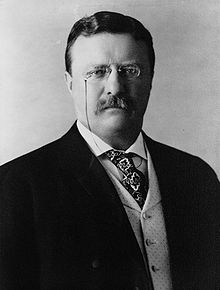
Teddy Roosevelt

In an earlier generation, FDR’s fifth cousin, President Theodore Roosevelt, warned on separate occasions:

Probably the greatest harm done by vast wealth is the harm that we of moderate means do ourselves when we let the vices of envy and hatred enter deep into our own natures. But there is another harm; and it is evident that we should try to do away with that. The great corporations which we have grown to speak of rather loosely as trusts are the creatures of the State, and the State not only has the right to control them, but it is duty bound to control them wherever the need of such control is shown.

Our aim is not to do away with corporations; on the contrary, these big aggregations are an inevitable development of modern industrialism, and the effort to destroy them would be futile unless accomplished in ways that would work the utmost mischief to the entire body politic. We can do nothing of good in the way of regulating and supervising these corporations until we fix clearly in our minds that we are not attacking the corporations, but endeavoring to do away with any evil in them. We are not hostile to them; we are merely determined that they shall be so handled as to subserve the public good. We draw the line against misconduct, not against wealth.

The great corporations which we have grown to speak of rather loosely as trusts are the creatures of the State, and the State not only has the right to control them wherever need of such control is shown… [Applause] The immediate necessity in dealing with trusts is to place them under the real, not the nominal, control of some sovereign to which, as its creatures, the trusts owe allegiance, and in whose courts the sovereign’s orders may be enforced. In my opinion, this sovereign must be the National Government.

The Civil War Era

Lincoln

In a 1864 letter to Col. William F. Elkins, President Abraham Lincoln wrote:

I see in the near future a crisis approaching that unnerves me and causes me to tremble for the safety of my country.
… corporations have been enthroned and an era of corruption in high places will follow, and the money power of the country will endeavor to prolong its reign by working upon the prejudices of the people until all wealth is aggregated in a few hands and the Republic is destroyed.

Lincoln also said:

The money powers prey upon the nation in times of peace and conspire against it in times of adversity. It is more despotic than a monarchy, more insolent than autocracy, and more selfish than bureaucracy. It denounces as public enemies, all who question its methods or throw light upon its crimes. I have two great enemies, the Southern Army in front of me and the Bankers in the rear. Of the two, the one at my rear is my greatest foe.

Abe Lincoln was precient in his 1864 letter, because…

[A U.S.] Supreme Court ruling in 1886 … arguably set the stage for the full-scale development of the culture of capitalism, by handing to corporations the right to use their economic power in a way they never had before. Relying on the Fourteenth Amendment, added to the Constitution in 1868 to protect the rights of freed slaves, the Court ruled that a private corporation is a natural person under the U.S. Constitution, and consequently has the same rights and protection extended to persons by the Bill of Rights, including the right to free speech. Thus corporations were given the same ‘rights’ to influence the government in their own interests as were extended to individual citizens, paving the way for corporations to use their wealth to dominate public thought and discourse. The debates in the United States in the 1990s over campaign finance reform, in which corporate bodies can “donate” millions of dollars to political candidates stem from this ruling although rarely if ever is that mentioned. Thus, corporations, as “persons,” were free to lobby legislatures, use the mass media, establish educational institutions such as many business schools founded by corporate leaders in the early twentieth century, found charitable organizations to convince the public of their lofty intent, and in general construct an image that they believed would be in their best interests. All of this in the interest of ‘free speech.’

— Richard Robbins, Global Problems and the Culture of Capitalism, (Allyn and Bacon, 1999), p.100 (Bold Emphasis Added)

Waite

In actuality, the Supreme Court ruled no such thing in 1886.

The ‘corporations are persons’ ruling was a fiction created by the court’s reporter. He simply wrote the words into the headnote of the decision. The words contradict what the court actually said. There is, in fact, in the US National Archives a note by the Supreme Court Chief Justice of the time explicitly informing the reporter that the court had not ruled on corporate personhood in the Santa Clara case.

— Thom Hartmann, Dinosaur War, The Ecologist, December/January 2002 Issue

Nevertheless, because the ruling was widely interpreted to mean that ‘corporations are persons,’ it was the beginning of the end for Lincoln’s government “of the people…” As Allyn and Bacon note above, this history is never mentioned in contemporary discourse or mainstream journalism. The Whig/Replublican dominated Waite Court of the Lincoln era turned personhood (and thus citizenship) on its head with this ruling, and set the stage for the gradual takeover of representative government by monied interests that Eisenhower warned about in 1960, and that we endure today.

The Revolutionary Era

Smith

Even the father of modern capitalism, Adam Smith, in his famous 1776 book Wealth of Nations (the “bible” of capitalism), was critical of some aspects of corporate activity.

Smith saw corporations as working to evade the laws of the market, trying to interfere with prices and controlling trade, etc.


The Founders

According to Rick Ungar, writing on The Policy Page for True/Slant:

The reality is that the Founding Fathers didn’t think very much of corporations or, for that matter, any of the organized moneyed interests that played so large a role in the decision to revolt against Mother England.

Clearly, the Founders did not think much of these [British] corporate entities and the corruption they produced in parliament. Still, it never occurred to the Founding Fathers to directly address corporations in America when they wrote the Constitution. While we can only speculate, it is not hard to understand why this would be the case. The Constitution speaks to control of government by the people…for the people…and of the people. Why would it even occur to the Founders that a corporation would ever be perceived as one of ‘the people’? History makes clear that they viewed these entities as forces that preyed on people (see The Boston Tea Party.) Indeed, but for a legal determination made in a perverse Supreme Court holding in 1886, who would rationally see a legal entity as a person? Is a trust a ‘person’? Does it eat, breathe, etc.?

Back in the early days of the nation, most states had rules on the books making any political contribution by a corporation a criminal offense.

Jefferson

John Nichols, writing for The Nation,, wrote:

Jefferson’s distrust of concentrated and consolidated power was such that he left a legacy for any and every dissenter against the state. But Jefferson did not stop there.

He was, as well, a relentless critic of the monopolizing of economic power by banks, corporations and those who put their faith in what the third president referred to as “the selfish spirit of commerce (that) knows no country, and feels no passion or principle but that of gain.

Jefferson might not have wanted a lot of government, but he wanted enough government to assert the sovereignty of citizens over corporations. To his view, nothing was more important to the health of the republic.

Thomas Jefferson wrote:

I believe that banking institutions are more dangerous to our liberties than standing armies. Already they have raised up a moneyed aristocracy that has set the government at defiance.

Back to the future…

So this struggle to protect our nation and its government from corporate and other monied interests has plagued us from the start, and will continue to plague us as long as we allow unbridled capitalism to define our values, corrupt our politics, and control our society. We, the people, are guilty of permitting this by our acquiescence, and by the naiveté of many who buy into the pablum that “greed is good” because it makes possible “the American dream” of personal wealth, power, and fame. By buying into this philosophy, we leave behind our values of the common good as enshrined in the Constitution, and we embrace the values of power and self-interest — the very antithesis of that document.

From Civil War to Uncivil Warfare — an unofficial history

The 19th Century – Civil War


The great American Civil War of the 19th century was, at its core, waged over the fear of losing a way of life. The Civil Rights act of 1866, which was immediately enshrined in Article I of the 14th amendment, officiated the end of slavery and of the 1857 Dred Scott decision which asserted that blacks could not be US citizens. This, together with the impositions of the post-war Reconstruction, represented the devastating loss of a long-held way of life by millions, mostly—but not exclusively—in the South.

Bear in mind that the end of slavery didn’t simply represent a radical change to an economic way of life. The change it represented to a social and cultural way of life was earth-shaking. For two centuries, slave-holding communities had developed customs, traditions, beliefs and moral principles based on the inferiority and “natural” servitude of black slaves (and of any others who were not white anglo-saxon protestants (WASPS)). These beliefs were largely echoed across the nation, though they weren’t quite as socially acceptable outside the South.

Southern states, in particular, sought to minimize the impact on their way of life by enacting “Jim Crow” laws which effectively segregated blacks from the white population. These laws were tolerated by the US and by its Supreme Court for an entire century. During this period, the South managed to retain much of its traditional way of life (without official slavery) and reaffirmed its pride in having different customs, traditions, beliefs and moral principles from the rest of the country. The political leanings of the southern states were generally conservative to moderate.

During this same period, the differences in customs, traditions, beliefs and moral principles of our nations’s urban and rural communities widened as well. Our urban communities were growing in leaps in bounds, with non-WASP European immigrants comprising an ever-increasing proportion. This explosive immigration caused a good deal of conflict, to be sure. But over the course of a century, cities began to see the great benefit of their “melting pots,” where the working classes were becoming their new middle class. This new working class was generally progressive in their politics, since they sought access to equal opportunity and to fair treatment.

Rural communities remained largely unchanged during this period, though they did benefit from the development of national highways, of industrialization, of farming modernization, and of federal farming programs. Their communities remained largely WASP, and their social lives remained generally modest, and centered around their local churches and religious leaders. Their politics were generally moderate to conservative.

The 20th Century – Social Revolution

If late 19th century was a time of great post-civil war industrial and societal change, the mid-to-late 20th century was downright revolutionary.

• In 1935, President Franklin D. Roosevelt signed the Social Security act. Southern Democrats sought to modify the legislation to minimize its benefits to black citizens.
• In 1938, President Roosevelt signed the Fair Labor Standards Act, which officially granted many of the workplace rights we enjoy today. Southern Democrats opposed the legislation, and successfully worked to weaken it until amendments were passed many years later to reinstate the Act’s effectiveness.
• In 1948, President Truman signed an Executive Order stating, “It is hereby declared to be the policy of the President that there shall be equality of treatment and opportunity for all persons in the armed services without regard to race, color, religion, or national origin.” It was opposed by Democratic and Republican conservatives (mostly southern).
• In 1954, The Supreme Court ruled that segregation in public schools is unconstitutional, paving the way for large-scale desegregation. This overturned the 1896 ruling that sanctioned “separate but equal” segregation of the races. It was objected to by Democratic and Republican conservatives (mostly southern).
• In 1962, President John F. Kennedy established the pilot Food Stamp Program, the first national program to combat hunger since the FDR era.
• In January 1964, The 24th Amendment abolished the poll tax, which originally had been instituted in 11 southern states after Reconstruction to make it difficult for poor blacks to vote.
• In July 1964, President Johnson signed the Civil Rights Act of 1964 which prohibits discrimination based on race, color, religion, or national origin. The law also provided the federal government with the powers to enforce desegregation. It was opposed by Democratic and Republican conservatives (mostly southern).
• Also in 1964, President Lyndon B. Johnson signed the Food Stamp Act of 1964. Republicans and conservative Democrats warned of “socialism.”
• President Johnson signed the Social Security Act of 1965, establishing Social Security, Unemployment Insurance, Medicare and Medicaid. Republicans and conservatives warned of “socialism,” and of “unearned entitlements,” when in fact they have always been nothing more than a form of social insurance.
• President Johnson also signed the Higher Education Act of 1965, establishing, among many other things, the Pell Grant program, garnering the usual opposition from Republicans and conservative Democrats.
• In August 1965, Congress passed the Voting Rights Act of 1965, making it easier for Southern blacks to register to vote. Literacy tests, poll taxes, and other such requirements that were used to restrict black voting were now illegal nationally. It was opposed by Democratic and Republican conservatives (mostly southern).
• In September 1965, President Johnson issued an Executive Order which enforced affirmative action for the first time, requiring government contractors to “take affirmative action” toward prospective minority employees in all aspects of hiring and employment. It was opposed by Democratic and Republican conservatives (mostly southern).
• In 1967, the Supreme Court ruled that prohibiting interracial marriage is unconstitutional. Sixteen states that still banned interracial marriage at the time were forced to revise their laws. It was opposed by Democratic and Republican conservatives.
• In 1968, President Johnson signed the Civil Rights Act of 1968, prohibiting discrimination in the sale, rental, and financing of housing. It was opposed by Democratic and Republican conservatives (mostly southern).
• In 1971, The Supreme Court upheld busing as a legitimate means for achieving integration of public schools. Although largely unwelcome (and sometimes violently opposed) in local school districts, court-ordered busing plans in cities such as Charlotte, Boston, and Denver continued until the late 1990s. Busing was opposed by Democratic and Republican conservatives .
• In 1988, overriding President Reagan’s veto, Congress passed the Civil Rights Restoration Act, which expanded the reach of non-discrimination laws within private institutions receiving federal funds. It was opposed by Democratic and Republican conservatives.
• In 2008, Senator Edward Kennedy introduced the Civil Rights Act of 2008. Some of the proposed provisions included ensuring that federal funds are not used to subsidize discrimination, holding employers accountable for age discrimination, and improving accountability for other violations of civil rights and workers’ rights. It was opposed by Democratic and Republican conservatives.

It would be an understatement to say that the mid-to-late 20th century was the greatest era of progressive social achievement in modern history. One effect of these changes was to utterly remove the discretionary “wiggle room” previously afforded to both southern and rural states when it came to their handling of civil, voting, labor, education, and housing rights, and to their handling of minorities in general. The national acts of the 50s and 60s, in particular, were seen by many conservatives as not only revolutionary, but as a cumulative political “act of war” against a way of life, particularly in the rural South and Midwest. President Johnson famously predicted the political loss of the South to the Republican party when he signed the Civil Rights Act of 1968, and he was dead right. As far as the rural South and Midwest states were concerned, the revolution of civil and social rights laws were the equivalent of a new political “civil war.” That political war has been smoldering for half a century.

The 21st Century – Uncivil Warfare

Beginning with the presidency of Ronald Reagan, the 80s represented a turning point in the progressive social revolution of the mid-20th century. As noted in the first blog entry of Rick’s Cafe, “The Rightward Drift of the Middle Class”:

“By the end of the 70s and into the 80s, with the wrenching issues of civil rights, Vietnam, and Watergate no longer on the front burner, the working class (many of whom were now “middle class”) became upwardly mobile and socially comfortable. Comfort led some to complacency, which led to more conservative thinking. The social values whose stakes everyone once clearly understood seemed to no longer have relevance to many.

“Former hippies were now yuppies. Former liberals were now politically-correct progressives. Former progressive intellectuals were now neo-conservatives. Some former working class Democrats began voting for Republicans because they leaned toward social conservatism. In the meantime, as a result of the civil rights movement of the 60s, the mostly conservative Democratic South had became the mostly conservative Republican South. Rural farmers and landowners were becoming more wealthy, and predictably, more conservative. The country was changing.”

Indeed. “Big government” had become a pejorative term, denoting wasteful spending, political “pork,” the infringement of individual “freedoms,” and a corruption of the “traditional values” of earnestness and hard work. Progressive social programs were now being viewed by conservatives as “unearned” entitlements, a “socialist” redistribution of wealth, and a collection of “burdens” imposed on the young, and on future generations. Social protections for employment conditions, the environmental, prenatal, elderly, and poor health care, economic assistance, education assistance, housing, and more, were now being viewed with suspicion if not outright contempt. As President Reagan famously put it, “Government is not the solution to our problem; government _is_ the problem.”

By the time the next Democratic President was elected in the 90s, the politics of our nation had shifted dramatically. The political term “Liberal” had become the noun associated with a “big government” adjective, and there there were nearly zero political Liberals to be seen in the halls of government. Though some former Liberals were now “progressive” Democrats, even that term was uttered in soft murmurs lest they be branded as—heaven forbid—”big government liberals.” President Clinton, a gifted politician and communicator, found it necessary to “triangulate” his politics in order survive and function. In his 1996 State of the Union Address, Clinton himself declared that the “era of big government is over.” With his 1992 reelection campaign coinciding with the return of a Republican congressional majority, he further pledged to “end welfare as we know it.” The longterm rise of conservative politics begun in the 80s had been firmly established by the 90s in the form of “triangulation.”

This political trajectory continued in one form or another through both terms of President George W. Bush, and only diminished somewhat as a result of his growing unpopularity. During the terms of both Presidents Clinton and G.W. Bush, the political divide between Democrats and Republicans, between the progressive left and conservative right—had become wider than it had ever been in many generations. The gap was becoming reminiscent of our 18th century divisions over fears about the loss of a “way of life.” For the left, it represented the fear of a return to a society dominated by power and greed, dismantling the hard-won rights and protections established by progressive efforts. For the right, it represented the fear of continued “big government,” the loss of individual freedoms, and the curtailment of free enterprise.

With the 2008 election of the first African-American President, this socio-political divide virtually imploded. The election of President Barack Obama had less to do with a national shift back to a progressive agenda, and far more to do with the disappointment and disaffection of political moderates (so-called “independents”) with the G.W. Bush legacy of wars and economic decline. It was simply a matter of time before those moderates grew impatient with the continuation of those wars along with the regrettable economic decline that continued under President Obama, and voted for “change” once again by electing scores of radical “Tea Party” Republican newcomers to congress during the 2010 midterm elections. One suspects that most of these voters weren’t prepared for the kind of hardcore ideology these Tea-partiers would bring to Washington DC. Add to this the ugly face of racism that emerged during the 2008 election campaign, and the public commitment by the Republican leadership to make the failure of the Obama presidency the party’s primary political objective, and the political trajectory was predictable—and scary.

The rise of Republican ideologues brought us governors committed to balancing state state budgets by defunding education and scores of public programs, and congresspeople who would rather decimate programs that support the middle class than ask the wealthy to pay fair taxes. This summer, these ideologues brought our nation to the brink of debt default, caused our federal credit rating to be lowered for the first time in history, created the worst market crash since 2008 (so far), and as of this writing, its ultimate effects are anyone’s guess. But worse than all this, they’ve brought our nation’s government to a screeching halt, and worst of all—they’re proud of it.

This represents nothing less than outright warfare. Uncivil warfare. When one is in a war, one either engages the enemy or loses the war. What, if anything, are progressives in the 21st century prepared to do in the face of open uncivil warfare?

The Rightward Drift of the Middle Class

When I was a kid growing up in Coney Island in the 50s and early 60s, everyone I knew was a Democrat and a rabid Brooklyn Dodger fan. Sure, I met a few Yankee fans here and there, but most of them only became Yankee fans out of desperation when the Dodgers deserted us in ’58. And even they were still Democrats.

Brooklyn Dodger fans typically loved and identified with their team because the players represented the hopes and values of people like themselves. Yankee fans typically rooted for their team because they wanted to identify with successful winners. OK, this is broad generalization, but that’s the way most of us saw it, and most Yankees fans freely admitted it. And why not? Everyone loves a winner, right?

Wrong. Dodger fans also loved to win, but they loved the Brooklyn Dodgers—and what they stood for—much, much more (Red Sox fans know exactly what I’m talking about). They stuck by the team because it represented values worthy of loyalty and passionate support. And they did the same as Democrats.

Everyone I knew during that time were Democrats largely because their parents and grandparents were, and there are mighty good reasons for that. Most of their grandparents and great-grandparents lived through periods of injustice, poverty, unemployment, labor and wage abuses, ethnic, race and gender discrimination, rights abuses, infant mortality, poor health and sanitation, sub-standard housing and living conditions, early death, and the like.

They experienced and understood the crushing effect of the rich and powerful few using their resources to gather more wealth and power while fighting against the rights and welfare of the average citizen. They were terrorized, beaten and killed by henchmen (and by the police) when they tried to organize for workers rights. They were fought tooth and nail by monied interests (and right-wing publishers) when they pushed for a minimum wage, for humane work days and working conditions. They were opposed by the same monied interests when they sought to establish unemployment insurance that they themselves paid for. They were condemned by the same monied interests when they sought to establish a social security system paid for by the working class themselves—to offer some small nest egg in their final years. And on and on it went.

It was well understood that the working class was comprised almost entirely of Democrats because that was the party that fought for these social issues. Republicans, by and large, were either wealthy, well-off, or upwardly ambitious, and therefor wishing to be on the side of the rich and powerful “winners.” This is another broad generalization, but that’s the way most of us saw it, though most Republicans wouldn’t freely admit it.

By the 50s and 60s, urban kids like me understood little about their grandparents’ hardships. Our politics were formed mostly in the late 60s and early 70s. The social realities we came to experience were racial discrimination, and the rich and powerful sending working class kids off to war while their kids partied at ivy league universities. So the working class saw progressive Democrats fighting for social justice and against a brutal war while conservative Republicans opposed social justice and supported the Vietnam war. Though we no longer experienced many of the social hardships of our grandparents, we could still understand political values, and which parties represented them. In the 60s and 70s, there were actually conservative Democrats and progressive Republicans, so there was a wide spectrum of political and philosophical thought.

By the end of the 70s and into the 80s, with the wrenching issues of civil rights, Vietnam, and Watergate no longer on the front burner, the working class (many of whom were now “middle class”) became upwardly mobile and socially comfortable. Comfort led some to complacency, which led to more conservative thinking. The social values whose stakes everyone once clearly understood seemed to no longer have relevance to many.

Former hippies were now yuppies. Former liberals were now politically-correct progressives. Former progressive intellectuals were now neo-conservatives. Some former working class Democrats began voting for Republicans because they leaned toward social conservatism. In the meantime, as a result of the civil rights movement of the 60s, the mostly conservative Democratic South had become the mostly conservative Republican South. Rural farmers and landowners were becoming more wealthy, and predictably, more conservative. The country was changing.

Lyndon Johnson was our last liberal US President. Jimmy Carter was a good Democrat, but even by his term, the congress had become conservative. Bill Clinton was a gifted President, but his term was a classic case of divided government and philosophical compromise. President Obama (and the rest of us) should have seen this coming.

For more than a generation, we’ve seen our society return to the bad old days of corporate and private greed, diminished protections of our air, water and food, our homes and investments, our rights as consumers, our privacy, our employment opportunities, benefits and security, our health benefits, and more. We’re on an inexorable return to days of the robber barons—to the haves and the have-nots—to the powerful and the powerless.

But the problem, my friends, is not with our government; it’s with ourselves. As Pogo wisely said, “We have met the enemy, and he is us!”

It’s the middle class who votes people into office. And they’ve allowed themselves to buy into the myth that a progressive society is bad for the country because it’s bad for business—and we all know that “what’s good for business is good for the country.” We’ve bought into the myth that our society is defined by the principles of capitalism, rather than understanding that capitalism is a good thing when it serves our collective interests, but a bad thing when it primarily serves the interests of the monied few. We’ve allowed zealots to equate religious beliefs with secular and social values. We’ve tolerated ignorance and fear in our personal and political discourse, and we’ve passively permitted bullies to dominate our politics and our media.

The middle class of the new millennium needs to wake up and smell the need for a return to a progressive society.

Welcome to Rick’s Café

An old Brooklyn street kid seeks some straight talk
about the kind of society we want in this country

Do we want a democratic society based on rational, secular human values motivated by the common good, or do we want a society based on the power and influence of non-human and human entities motivated by greed?

    • If you don’t have social skills, please go elsewhere.
    • If you’re interested in honest communication, please participate.

Rick

Design a site like this with WordPress.com
Get started